Journal of International Oncology ›› 2026, Vol. 53 ›› Issue (8): 464-469.doi: 10.3760/cma.j.cn371439-20251015-00075
• Original Article • Previous Articles Next Articles
Construction of a nomogram prediction model for evaluating the therapeutic efficacy of hyperbaric oxygen chamber therapy in managing acute radiation dermatitis among breast cancer patients
Niu Ping, Tian Long, Cui Ling( )
)
Department of Radiation Oncology ,First Affiliated Hospital of Hebei Northern University Zhangjiakou 075000, China
-
Received:2025-10-15Online:2026-08-08Published:2026-07-21 -
Contact:Cui Ling, Email: zjkxhtl@126.com E-mail:zjkxhtl@126.com -
Supported by:S&T Program of Zhangjiakou(2522119D)

Cite this article
Niu Ping, Tian Long, Cui Ling. Construction of a nomogram prediction model for evaluating the therapeutic efficacy of hyperbaric oxygen chamber therapy in managing acute radiation dermatitis among breast cancer patients[J]. Journal of International Oncology, 2026, 53(8): 464-469.
share this article

"
| 临床资料 | 1级ARD (n=126) | 2级及以上ARD (n=378) | t/χ2值 | P值 |
|---|---|---|---|---|
| 年龄(岁,$ \bar{x} \pm s$) | 46.38±15.56 | 56.88±9.44 | -9.05 | <0.001 |
| KPS评分(分,$ \bar{x} \pm s$) | 80.45±8.22 | 79.49±7.95 | 1.16 | 0.245 |
| 体质量指数(kg/m2,$ \bar{x} \pm s$) | 26.89±6.45 | 25.94±5.32 | 1.64 | 0.101 |
| 化疗史[例(%)] | ||||
| 无 | 78(61.90) | 193(51.04) | 4.47 | 0.035 |
| 有 | 48(38.10) | 185(48.96) | ||
| 饮酒史[例(%)] | ||||
| 无 | 100(79.37) | 311(82.28) | 0.53 | 0.466 |
| 有 | 26(20.63) | 67(17.72) | ||
| 吸烟史[例(%)] | ||||
| 无 | 103(81.75) | 325(85.98) | 1.32 | 0.250 |
| 有 | 23(18.25) | 53(14.02) | ||
| 肿瘤分期[例(%)] | ||||
| Ⅰ | 75(59.52) | 230(60.85) | 0.32 | 0.853 |
| Ⅱ | 29(23.02) | 90(23.81) | ||
| Ⅲ | 22(17.46) | 58(15.34) | ||
| 肿瘤部位[例(%)] | ||||
| 左胸 | 59(46.83) | 185(48.94) | 0.17 | 0.681 |
| 右胸 | 67(53.17) | 193(51.06) | ||
| 肿瘤最大径(cm,$ \bar{x} \pm s$) | 3.22±1.05 | 3.43±1.21 | -1.74 | 0.082 |
| 最大照射野面积 (cm2,$ \bar{x} \pm s$) | 82.44±8.45 | 83.19±8.98 | -0.82 | 0.411 |
| 子野数量(个,$ \bar{x} \pm s$) | 52.25±5.89 | 53.37±6.67 | -1.68 | 0.094 |
| 高血压[例(%)] | ||||
| 无 | 93(73.81) | 236(62.43) | 5.40 | 0.020 |
| 有 | 33(26.19) | 142(37.57) | ||
| 糖尿病[例(%)] | ||||
| 无 | 99(78.57) | 256(67.72) | 5.34 | 0.021 |
| 有 | 27(21.43) | 122(32.28) | ||
| 高血脂[例(%)] | ||||
| 无 | 101(80.16) | 286(75.66) | 1.07 | 0.300 |
| 有 | 25(19.84) | 92(24.40) | ||
| 微循环障碍[例(%)] | ||||
| 无 | 123(97.62) | 350(92.59) | 4.14 | 0.042 |
| 有 | 3(2.38) | 28(7.41) | ||
| 动脉粥样硬化[例(%)] | ||||
| 无 | 113(89.68) | 310(82.01) | 4.12 | 0.042 |
| 有 | 13(10.32) | 68(17.99) |
"
| 自变量 | β值 | SE值 | Wald χ2值 | OR值 | 95%CI | P值 |
|---|---|---|---|---|---|---|
| 年龄(≤51岁) | 0.48 | 0.22 | 4.70 | 1.56 | 1.09~1.93 | 0.031 |
| 化疗史(无) | 0.83 | 0.22 | 14.30 | 2.30 | 1.66~4.78 | <0.001 |
| 高血压(无) | 0.58 | 0.26 | 5.05 | 1.79 | 1.24~2.78 | 0.026 |
| 糖尿病(无) | 0.63 | 0.27 | 5.48 | 1.88 | 1.39~3.25 | 0.019 |
| 微循环障碍(无) | 0.77 | 0.29 | 7.21 | 2.15 | 1.58~4.46 | 0.004 |
| 动脉粥样硬化(无) | 0.70 | 0.28 | 6.08 | 2.01 | 1.49~4.27 | 0.010 |
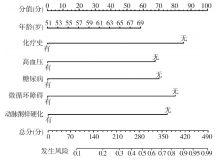
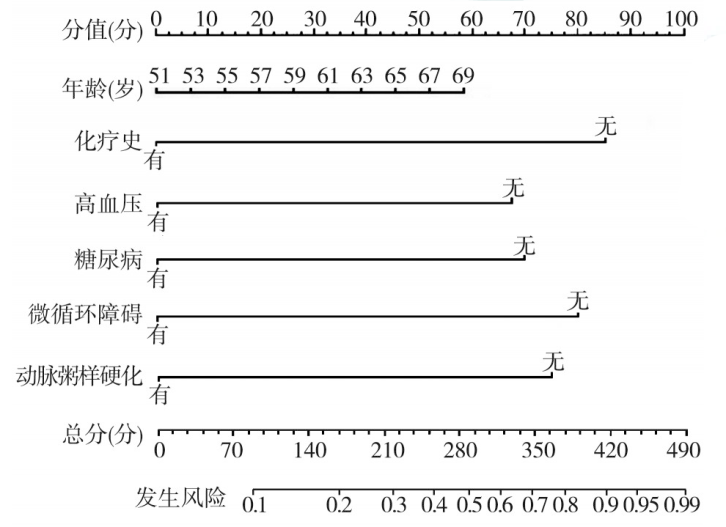
"
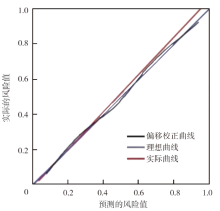
"
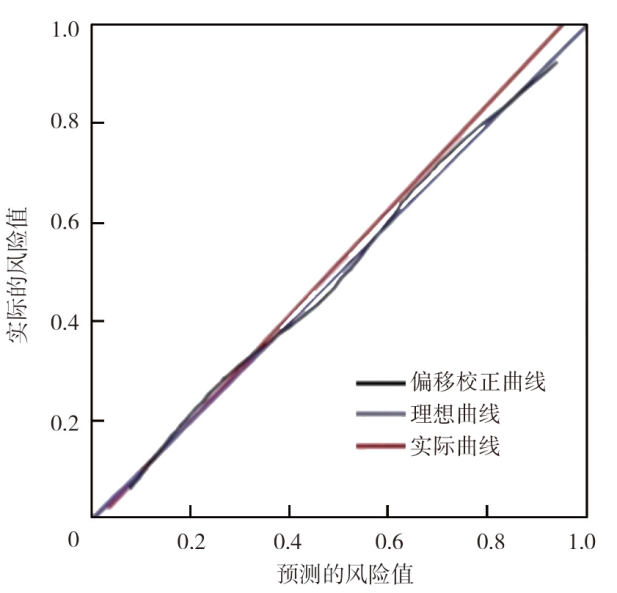
"
| [1] | 王莉, 肖翰, 黄国福. 环状RNA在三阴性乳腺癌中的作用机制及临床意义[J]. 国际肿瘤学杂志, 2024, 51(12): 774-778. DOI: 10.3760/cma.j.cn371439-20240702-00131. |
| [2] | 周婷, 徐少华, 梅林. 贝伐珠单抗联合卡培他滨治疗晚期乳腺癌的有效性及安全性[J]. 国际肿瘤学杂志, 2023, 50(3): 144-149. DOI: 10.3760/cma.j.cn371439-20230116-00029. |
| [3] | Liu ZG, Wang XR, Wu ZY, et al. HBOT has a better cognitive outcome than NBH for patients with mild traumatic brain injury: a randomized controlled clinical trial[J]. Medicine (Baltimore), 2023, 102(37): e35215. DOI: 10.1097/MD.0000000000035215. |
| [4] |
Xie YX, Hu T, Chen RW, et al. Predicting acute radiation dermatitis in breast cancer: a prospective cohort study[J]. BMC Cancer, 2023, 23(1): 537. DOI: 10.1186/s12885-023-10821-6.
pmid: 37308936 |
| [5] | Han XC, He Y, Yuan XN, et al. Hyperbaric oxygen therapy for patients with fibromyalgia: a systematic review protocol[J]. BMJ Open, 2023, 13(6): e071092. DOI: 10.1136/bmjopen-2022-071092. |
| [6] |
Anderson J, Fan FG. DIBH-IMRT for RTOG 1304, cancer of the left breast: a case study[J]. Med Dosim, 2021, 46(4): 356-359. DOI: 10.1016/j.meddos.2021.03.010.
pmid: 33934976 |
| [7] | 朱乐莎, 张遵浩, 田龙. 乳腺癌患者急性放射性皮炎关联规则预测模型创建[J]. 辐射研究与辐射工艺学报, 2025, 43(1): 65-72. DOI: 10.11889/j.1000-3436.2024-0061. |
| [8] | 袁春兰, 杨培金, 田卫兵. CTA、MRA在诊断糖尿病足患者下肢血管病变中的临床意义[J]. 中国CT和MRI杂志, 2025, 23(8): 186-188. DOI: 10.3969/j.issn.1672-5131.2025.08.052. |
| [9] | Zhong QX, Zhao YJ, Zeng L. The clinical effect of breast conservation surgery and modified radical mastectomy on breast cancer: a systematic review and meta-analysis[J]. Curr Probl Surg, 2025, 68: 101772. DOI: 10.1016/j.cpsurg.2025.101772. |
| [10] |
Assaf GR, Yared F, Dib MJ, et al. Efficacy of opioid-free anesthesia in modified radical mastectomy: a cross-sectional observational study[J]. Ann Med Surg (Lond), 2023, 85(9): 4289-4292. DOI: 10.1097/MS9.0000000000000718.
pmid: 37663699 |
| [11] | 胡秀茹, 许文秀, 张伟, 等. 高压氧喷联合贝复济治疗3/4级放射性皮炎的临床疗效观察[J]. 中国中西医结合皮肤性病学杂志, 2022, 21(5): 430-432. DOI: 10.3969/j.issn.1672-0709.2022.05.010. |
| [12] |
Lee JY, Hyun MH, Yang G, et al. Efficacy and safety of hyperbaric oxygen therapy for radiation-induced dermatitis in patients with breast cancer: a randomized pilot study[J]. Support Care Cancer, 2025, 33(5): 399. DOI: 10.1007/s00520-025-09463-0.
pmid: 40259026 |
| [13] | Kim HR, Lee A, Choi EJ, et al. Reactive oxygen species prevent imiquimod-induced psoriatic dermatitis through enhancing regulatory T cell function[J]. PLoS One, 2014, 9(3): e91146. DOI: 10.1371/journal.pone.0091146. |
| [14] |
Ruiz-Mambrilla M, Dueñas-Ruiz A, Pérez-Castrillón JL, et al. Speech therapy and hyperbaric oxygen for aphasia after carbon monoxide intoxication[J]. Undersea Hyperb Med, 2023, 50(1): 3-7. DOI: 10.22462/01.01.2023.15.
pmid: 36820801 |
| [15] | Zwoliński M, Hovagimyan A, Ignatowicz J, et al. The supporting role of hyperbaric oxygen therapy in atopic dermatitis treatment[J]. J Clin Med, 2025, 14(9): 3138. DOI: 10.3390/jcm14093138. |
| [16] | Lin ZC, Bennett MH, Hawkins GC, et al. Hyperbaric oxygen therapy for late radiation tissue injury[J]. Cochrane Database Syst Rev, 2023, 8(8): CD005005. DOI: 10.1002/14651858.CD005005. |
| [17] | Zhang YY, Zhou YJ, Jia YY, et al. Adverse effects of hyperbaric oxygen therapy: a systematic review and meta-analysis[J]. Front Med (Lausanne), 2023, 10: 1160774. DOI: 10.3389/fmed.2023.1160774. |
| [18] |
Zhang L, Liu L, Li F, et al. Research trends and hot spots in the prevention and management of radiation dermatitis: a bibliometric analysis based on CiteSpace[J]. Radiat Oncol, 2025, 20(1): 55. DOI: 10.1186/s13014-025-02628-5.
pmid: 40241141 |
| [1] | Lan Liu, Guo Min, Wei Tingting, Zhao Yingxi, Long Yaxiu. Efficacy and safety analysis of full-course toripalimab combined with induction chemotherapy and concurrent chemoradiotherapy in the treatment of locally advanced nasopharyngeal carcinoma [J]. Journal of International Oncology, 2026, 53(9): 513-520. |
| [2] | Fang Haiping, Huang Yi, Wang Genhe. Research progress in immunotherapy for advanced triple-negative breast cancer [J]. Journal of International Oncology, 2026, 53(9): 547-553. |
| [3] | Liu Yonghong, Zhang Bo, Xue Lingbo, Hu Pengfei, Zhang Zhenyu, Li Jie. Predictive value of XGBoost model for pathological complete response after neoadjuvant chemotherapy in breast cancer patients [J]. Journal of International Oncology, 2026, 53(7): 412-419. |
| [4] | Su Jialin, Zheng Jin, Zhao Canjun, Han Lijun, Zhang Jie, Wang Liping. Factors influencing the occurrence of high-grade acute radiodermatitis in patients undergoing image guided radiation therapy after breast cancer surgery and the construction of a prediction model [J]. Journal of International Oncology, 2026, 53(6): 339-345. |
| [5] | Li Lina, Liu Shuai, Zhang Nan. Research progress on preoperative radiotherapy for breast cancer [J]. Journal of International Oncology, 2026, 53(5): 301-305. |
| [6] | Han Yufei, Li Fengmei, Zhang Weina, Zhang Ping, Hou Ping. Short-term efficacy and clinical outcomes of concurrent chemoradiotherapy followed by anlotinib maintenance treatment in patients with locally advanced cervical cancer [J]. Journal of International Oncology, 2026, 53(4): 219-223. |
| [7] | Li Yao, Tian Lin, Liu Haolin, Xiao Jing. Effects of lncRNA CASC19 on proliferation,migration and invasion of breast cancer cells by regulating miR-410-3p/LAMC1 signaling pathway [J]. Journal of International Oncology, 2026, 53(3): 129-136. |
| [8] | Chen Qiaoliang, Qin Xinyan, Du Haiwen, Tan Shuangxiu. Value of an interpretable machine learning model based on intratumoral and peritumoral ultrasound radiomics for predicting PD-L1 expression status in breast cancer [J]. Journal of International Oncology, 2026, 53(10): 584-590. |
| [9] | Liu Xinlei, Li Yaru, Chen Shuning, Tang Shenghao, Qin Yan, Liu Yankui, Qi Xiaowei. Research progress of HER2 ultra-low expression breast cancer [J]. Journal of International Oncology, 2026, 53(1): 53-56. |
| [10] | Chen Qiaoliang, Qin Xinyan, Lai Ruihe, Tan Shuangxiu. Diagnostic value of multimodal Nomogram model combining 18F-FDG PET/CT and ultrasound for triple negative breast cancer [J]. Journal of International Oncology, 2025, 52(9): 560-565. |
| [11] | Wu Songyou, Wang Gang, Wang Wenling, Dong Hongmin, Chen Weiwei, Li Xiaokai, Chen Wanghua, Zuo Kai. Prospective cohort study on the effect of abdominal circumference on the intestinal radiation dose volume and the acute intestinal toxicity in pelvic intensity modulated radiation therapy for rectal cancer patients [J]. Journal of International Oncology, 2025, 52(9): 566-575. |
| [12] | Guo Junlong, Zou Ruiqi, Chen Shaoqiang, Liang Yuxin, Li Jing, Yong Sunan, He Yuting, Xie Xiaobing, Li Ping. Research progress of RNA m6A modification in breast cancer [J]. Journal of International Oncology, 2025, 52(8): 532-537. |
| [13] | Li Chengqiang, Wang Yungang, Yu Yishan, Wu Shizhang, Tao Cheng, Ma Xingmin, Dai Tianyuan, Duan Jinghao, Chen Jinhu, Bai Tong, Zhu Jian. Analysis of dosimetric characteristics of proton radiotherapy in 4 cases of breast cancer [J]. Journal of International Oncology, 2025, 52(7): 448-454. |
| [14] | Li Lixi, Duan Boshi, Qian Haili, Ma Fei. Advances in the clinical and translational applications of breast cancer organoids [J]. Journal of International Oncology, 2025, 52(6): 379-381. |
| [15] | Zhou Wenkao, Huang Hesen, Pan Yimei, Huang Lingyan, Wang Mingshan, Zhao Fangli, Wang Ya, Tang Huimin. Comparison of the efficacy and construction of prediction model for relapse free survival in breast cancer based on diabetes mellitus type 2 [J]. Journal of International Oncology, 2025, 52(5): 295-303. |
| Viewed | ||||||
|
Full text |
|
|||||
|
Abstract |
|
|||||